Around the show
Marbella old town on foot
Plaza de los Naranjos, Plaza Santo Cristo and the walled core of Marbella's old town: what to look at around an evening flamenco show.
Book the flamenco show ↗Quick answer
Marbella's old town is a walled core that Wikipedia says keeps nearly the layout it had in the 16th century. Plaza de los Naranjos is its central square, and Plaza Santo Cristo, where the flamenco show is, lies in the same old town. Allow time to walk before the show and to eat after it, since the ticket includes a drink but no dinner.
A walled old town
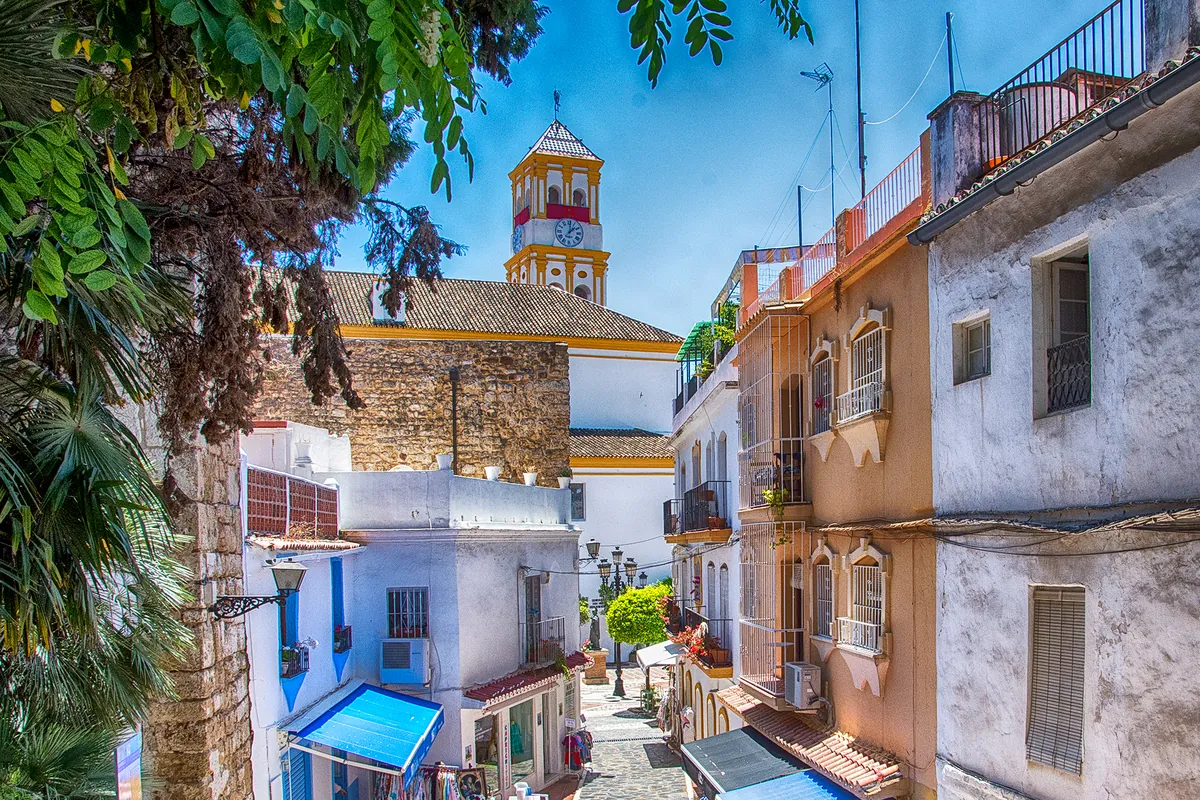
Wikipedia says Marbella's old town includes the ancient city walls and two historical suburbs, and that the walled city retains nearly the same layout as in the 16th century. The Marbella tourism office says that during the Islamic period Marbella became a walled city, that the Muslims built a castle, and that the castle dates to the 10th century. The remains of the castle are preserved, so the old town is worth a slow walk before a show.
Plaza de los Naranjos
The tourism office says the 16th century brought important changes to Marbella's urban structure, and that the centre of the Muslim medina, today the old town, was demolished to open a square, now the Plaza de los Naranjos. Wikipedia calls the square an example of Castilian Renaissance design, built along Castilian urban lines after the Christian takeover of 1485. Naranjos means orange trees, and the square is the old town's meeting place.
Plaza Santo Cristo and the hermitage
Plaza Santo Cristo is where the flamenco show is held, at Plaza Santo Cristo 4. Wikipedia lists the Ermita del Santo Cristo de la Vera Cruz among the old town's sights, a hermitage built in the 15th century and enlarged in the 18th. A small square with a church tower is a quiet place to wait before a show, and the venue is a few doors from the lanes around it.
Eating before or after
The flamenco ticket includes one drink and no dinner, so the evening needs a meal built around it. The old town has places to eat around Plaza de los Naranjos. This guide names none, because menus and opening times change. A simple plan is to walk first, eat after the show, and keep the hour of music as the centre of the night rather than squeezing it between courses. A short walk after the show is also a good way to let the music settle.
A route for an evening
A simple route makes the most of the time. Start at Plaza de los Naranjos, where the square's terraces and Renaissance-style buildings frame the old town's centre. Walk the lanes towards Plaza Santo Cristo, with time in hand to arrive early. After the show, come back through the same lanes for dinner. Walk slowly, because the old town rewards looking up at its balconies, bell towers and whitewashed walls.
Who this isn't for
If you have limited mobility, note that the lanes of a walled old town can be narrow and uneven, and you should look up the route on a map before setting off. If you want a long, hands-on tour with a guide, this page is a background read, not a tour: it sells one ticket, the flamenco show, and the old town is the setting for it.
Getting around
The old town's lanes are narrow, and walking is the natural way to move within it. Marbella lies on the Costa del Sol, between Málaga and the Strait of Gibraltar, so most visitors reach the old town from another part of the coast. Check the route from your own hotel on a map before you leave, and give yourself time to arrive early for a small room. If you arrive by car, leave it outside the old town and walk in, because the lanes are narrow.
Sources